Explore Insights
Connection


Human Connection in Remote Work
How the best leaders help companies build deeper connection in a work-from-home world.
How the best leaders help companies build deeper connection in a work-from-home world.
Speakers: - Dov Seidman, Founder & Chairman – The HOW Institute for Society & LRN; Author – HOW - Zeev Klein, General Partner – Landmark Ventures
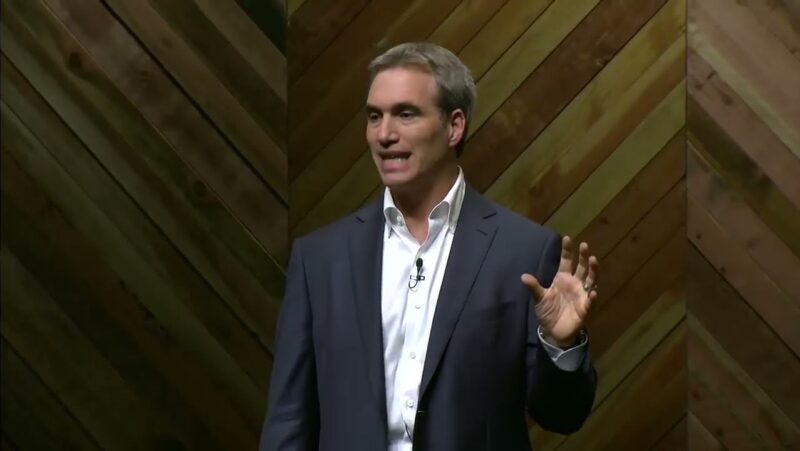
Dov Seidman gives the keynote address at Salesforce exploring the imperative of living, working, and leading with morality in a world radically reshaped by the forces of technology.
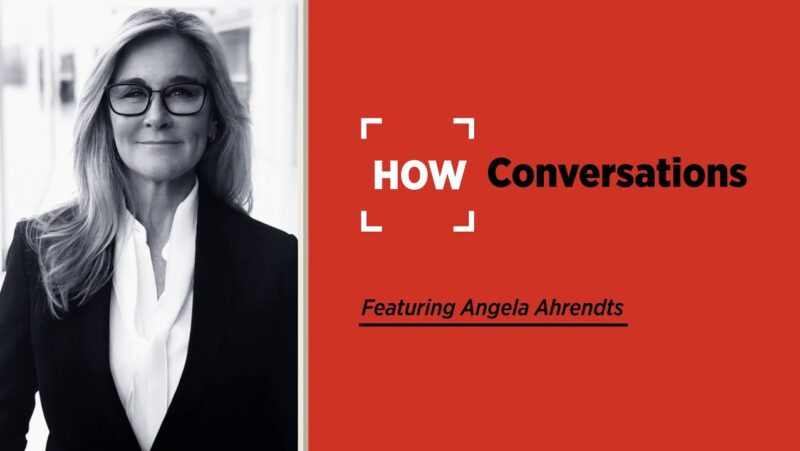

Angela Ahrendts believes success comes from putting others first, “My definition of moral leadership is always doing what’s best for the greater good of the whole, not yourself, not your boss, not your board.” Angela, a HOW Institute Board Member and the Chair of Save the Children International, spoke with Dov Seidman on HOW Conversations.


Human systems can’t function without formal authority, whether it’s the President of the US, a CEO or a school principal, but what makes organizations really work is when leaders occupying those formal positions have moral authority too. While formal authority can be seized, won, or bestowed; moral authority must be earned by who you are and how you lead.
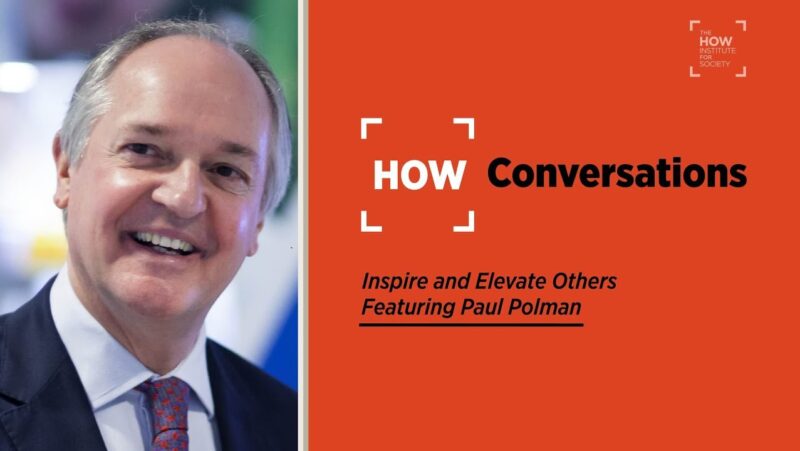
“COVID has been a rude awakening for most of us. For the first time we have seen that our current system isn’t really working as well as we intended,” says Paul Polman a HOW Institute Board Member and the former CEO of Unilever. Paul spoke with Dov Seidman in this episode of HOW Conversations about the challenges and the opportunities the pandemic has revealed.

When leaders invest in others it drives their own success forward, says Paul Polman, member of the Board of The HOW Institute. Paul spoke with Dov Seidman in Part Two of their HOW Conversations.

Darren Walker, President of the Ford Foundation thinks “we’re never going back to life as it was in January 2020.” Darren, who is also a member of The HOW Institute’s Board of Directors, spoke with Dov Seidman on this episode of HOW Conversations.

On this episode of HOW Conversations, the CEO of Levi Strauss & Co. Chip Bergh tells Dov Seidman how difficult it was to learn only about 3% of Levi’s leadership management are black. And how he’s leading the plan to fix the problem.

Dov Seidman and Nancy Gibbs, Lombard Director of the Shorenstein Center at Harvard Kennedy School and a HOW Institute Board member, have a wide-ranging conversation that touches on the many reasons that in this extraordinary moment where we, collectively, are facing so many simultaneous crises, moral leadership has evolved from a worthy pursuit to a critical survival skill for the future of society and humanity.


The big things Trump got wrong were twofold. The first was how to lead in a pandemic. The quality of our leadership in general is always a serious business, but in a pandemic, it becomes a matter of life or death. Leaders at every level — teachers, scientists, principals, presidents, school superintendents, hospital directors, C.E.O.s, mayors, governors, media, parents — are all being looked to for direction today more than ever because so many people feel disoriented and unmoored.
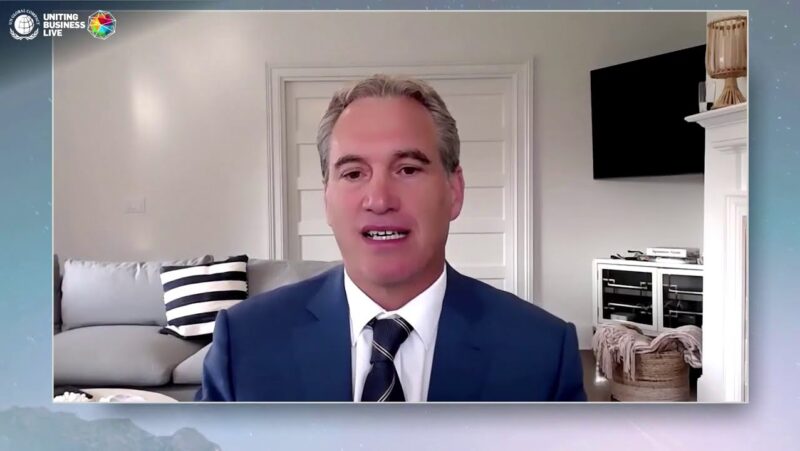
Dov Seidman, founder and chairman of The HOW Institute for Society spoke at the opening session of the UNGA 75 Private Sector Forum on September 22, 2020. Dov shared his thoughts on what it means to lead with courage in our rapidly reshaped world.

After all, Dov Seidman once wrote that “The Wave is not only an extraordinary act, it is a great symbol of our human connectedness and interdependence and thus the perfect metaphor for leadership.
As humans, one of the simplest and most powerful tools we have is the ability to pause. Pausing creates a space to make determinations about how to best move forward. The Pause questionnaire is an online tool to help people pause and reflect on their values and the consequences of their behavior.

Dov Seidman sits down with Scaling Up Founder and CEO, Entrepreneurs’ Organization Founder and author Verne Harnish speaks at the Bloomberg Breakaway CEO Summit in New York.
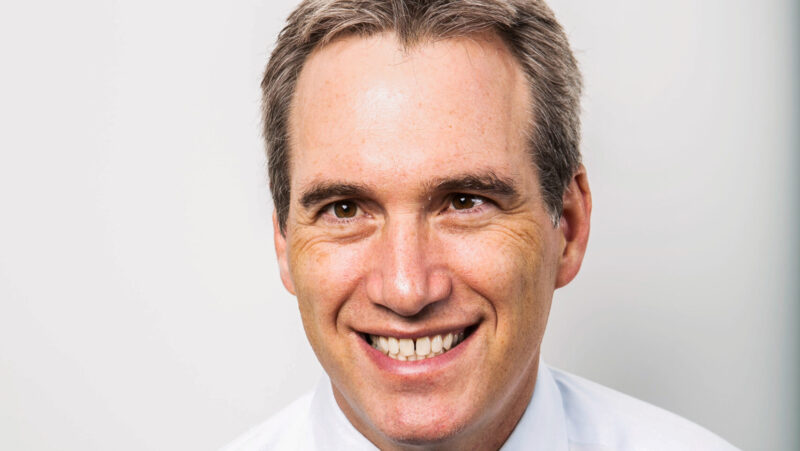

Turning his company into a movement: Seidman talks about ideas and inspirations the way a mechanic talks about pistons and carburetors. He makes them tangible and kinetic before your eyes.
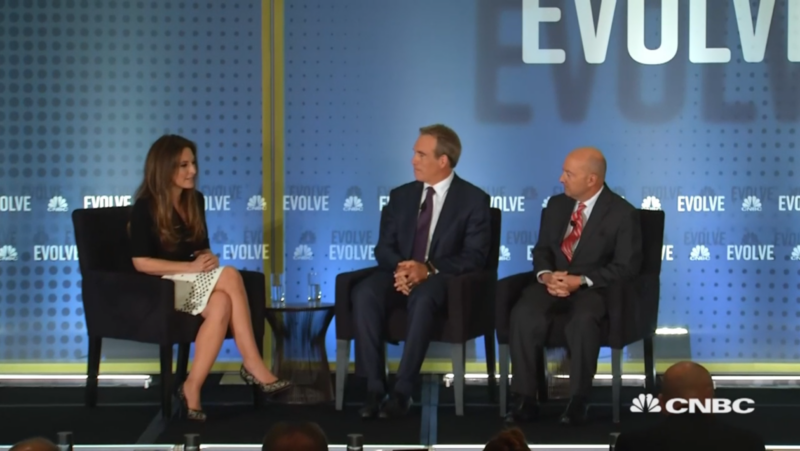
Former admiral James Stavridis motivated and inspired thousands of sailors amid shifting tides; Dov Seidmen, the ‘CEO whisperer’ teaches the ‘how’ of innovation. They both are joined by Suzy Welch at CNBC Evolve talking about what makes great leaders, and what new skills are needed in today’s dynamic business environment.


The global economy has been paralyzed by a widespread lack of certainty -- about the value of assets, the trustworthiness of borrowers and the outlook for the economy as a whole. I call this the Certainty Gap.
On October 15, 1981, professional cheerleader Krazy George Henderson realized a vision for an unbroken wave of human energy, which would give his team a sustained competitive advantage. In a playoff game between the Oakland As and the New York Yankees, he inspired more than 40,000 fans to join together, rise out of their chairs in unison, throw their arms up in the air and lend their voices to one, thunderous and perpetual cheer.

In an age of breathtaking innovation, digital trust has taken a knocking. How can we innovate rapidly and responsibly? How do we protect workers from automation? We demystify the pursuit of innovation with purpose.


When employees go public with objections to the perceived moral shortcomings of their companies, most executives react with a sigh of relief — glad it wasn’t their company. In the past year, employees at organizations ranging from Google and Amazon to Deloitte and McKinsey have protested the handling of sexual harassment allegations and petitioned management to stop working with customers that they consider unethical, immoral, or damaging to society.

In this lecture, Dov Seidman will discuss the implications of our reshaped world and the imperatives that creates for leaders, and for each of us.

"Who are America’s moral leaders?" USA Today asked in a recent headline. At a time when businesses are increasingly thrust to the forefront of complex issues such as racial bias, gender equity and privacy rights, an overwhelming majority of employees feel adrift. They do not believe their organizations are run by moral leaders.

Today, as the winners eloquently illustrate in their essays, the need for ethical thinking and action is more urgent than ever. In our hyper-connected, interdependent world, we can now feel the hope, dreams, frustrations, and anger of millions of others instantly. News of injustice and mistreatment spreads in an instant; the moral distance between us is disappearing. But the same technologies that connect us are also being used to undermine truth and trust. Never before have these twin pillars of society been under such widespread and continual assault.